





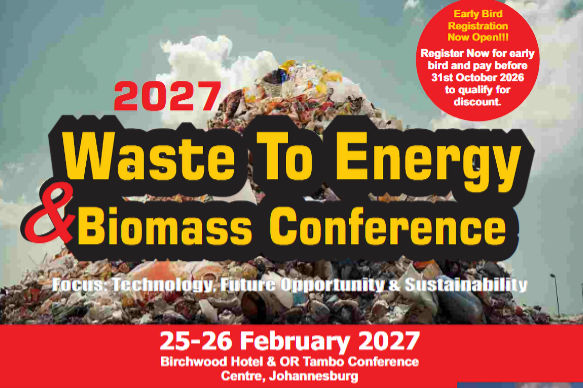
Waste To Energy Biomass Conference
Date: 25 – 26 February 2027
Location: Birchwood Hotel & OR Tambo Conference Centre, Johannesburg
Objectives of the Conference
- Technologies: Converts organic waste like food, scraps, agricultural waste, and sewage into biogas – the process.
- Learning the processes like gasication, pyrolysis, and incineration to turn non-recyclable materials and biomass into gas, steam, or electricity.
- Refuse-Derived Fuel (RDF): Processes solid and industrial waste into alternative fuel sources that can replace coal.
- WtE operations, converting methane from landfill sites into power for the national grid.
- Practical application of Downstream process technologies of Waste into liquid fuel
- Effciency of Waste to Energy Plants and to highlight economic future of Waste to Energy
- Technologies conversion of waste-to-energy from wastewater sludge via thermochemical conversion technologies in support of circular economy.
- Biomass Conversion and Biorenery: Focuses on the technical, chemical, environmental, and system-related aspects of biomass conversion and biorefinery processes.
- General Waste Management & Municipal Waste into small scale energy use.
- Network with the experts
Guest Speakers Includes:
- Gordon Ayres
Secretary General: Innovation Technologies, SABIA - Kgomotso Ncube
Environmental & Audit Compliance Mgr., EPR Waste Association of South Africa (eWASA) - Busiswa Ndaba-Vatsha
Senior Lecturer/Researcher, College of Science, Engineering & Technology (CSET) Institute for Catalysis & Energy Solution (ICES), Unisa - Pulane Sarah Motau
Chemical Engineer, NECSA - Richard Bingham
Group Director Technotherm
Conference Background
The WtE process contributes to circular economy principles by transforming waste products into valuable resources, reducing
dependency on fossil fuels, and mitigating greenhouse gas emissions. However, challenges remain, particularly in ensuring that
emissions from WtE plants, such as dioxins and furans, are properly managed to minimize environmental impact. Advanced pollution
control technologies are essential to address these concerns and ensure WtE remains a viable, environmentally sound solution.
WtE technologies present a significant opportunity to manage waste sustainably while contributing to global energy demands. They
represent an essential component of integrated waEarly Bird Registration 2027 Waste to Energy Conferenceste management strategies and a shift toward renewable energy systems. As
technology advances, WtE may play an increasingly critical role in both reducing landfill use and enhancing energy security.
Read the Full Brochure