


Are Universities obsolete?
Universities have long been accused of being “ivory towers” – expensive and elitist institutions disconnected from the real world.
Is any such disconnection growing? Are universities keeping up with the pace of change in the real world as the digital age advances, and is this even possible?
In short, is there any value in a university education these days?
Dolphin Bay first became curious about this issue two years ago, when we attended a “The Futurists” gathering at which Flux Trend’s Dion Chang, responding to a comment from the audience, agreed that the pace of change in the world might be outstripping many university curricula, and that preparation for work might be obtained in quicker, cheaper ways online.
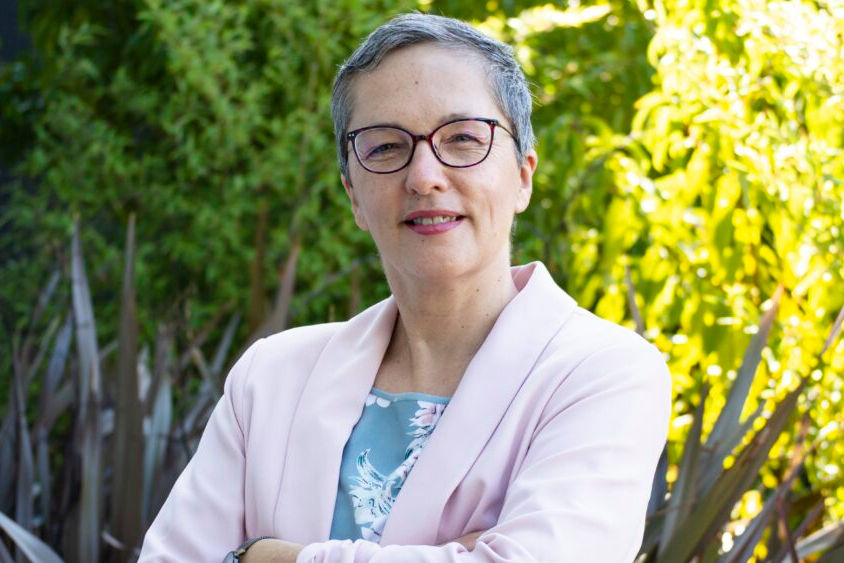
We discussed these issues with Dr Doris Viljoen, (pictured), director of the Institute for Futures Research and head of the academic programmes in Futures Studies at Stellenbosch Business School. Her responses were both intriguing and exciting.
The information revolution
There is no denying that information has become astonishingly cheap. If you have an internet connection and access to a decent AI tool, you can ask almost any question and receive an answer in seconds.
Need an explanation of quantum physics? A summary of a business book? Guidance for a history assignment? It’s all easy. AI can explain concepts, analyse information, summarise books, and draft essays in seconds.
If we are to spend substantial amounts of money sending to our children to university, it should be to learn skills other than these.
We had not anticipated Doris’s response. “If we think universities are there to put information into people’s minds, we’re outdated. But If we guide them on a journey of discovery, of creativity and making connections, then we have a place.”
Universities, she argues, are no longer primarily in the information business, but teach the very human skills that machines cannot replace.
Learning to think, not what to think
Despite the breadth of information at our disposal, many of us inhabit narrow echo chambers. We spend our lives moving between home, work and social media feeds that reinforce what we already think.
“But at university, you’re going to be exposed to everything, and to people who think totally differently from you. It’s important to hear them and understand where they stand.”
This is a challenging and life-changing process.
One of the students in her Futures Studies programme had a job writing about foresight before enrolling. We might assume this meant he had understood it – but once he was attending, it was a different matter entirely.
“Now that I’m doing it myself, it’s blowing my mind,” he told her. “I talk with my family differently; I see the world differently; I read the news differently.”
The student didn’t simply learn new information; he became a different person. “University makes you think broader and wider, making connections that you wouldn’t have made otherwise,” said Doris
That’s difficult to measure on a transcript or exam paper, but it may be one of the most important things that education can do.
“Some coaching by AIs is getting really convincing, but I think humans were designed for contact with other humans,” Doris said.
Then she uttered a line that captures the heart of her argument. “If people are sitting together, something magic happens. They are more innovative. They produce smarter ideas than they would have otherwise.
“And it’s not just a question of me seeing it; the participants in foresight activities themselves are saying, ‘I wouldn’t have come up with this on my own.’”
Experience is educational
Another theme that emerged repeatedly during our conversation is the importance of real-world experience.
AI may provide statistics, theories, and options for action, but it cannot place a student in the middle of a real problem they need to solve for real people. Many university programmes are increasingly trying to do exactly that.
Doris gave some examples. Residents of Stellenbosch informal settlement Kayamandi may not have enough to eat, while nearby hotels throw away food every day. Could students help to bridge this gap?
Students might be asked to investigate local traffic congestion and propose solutions such as a change in the timing of the traffic lights.
Or they might grapple with a challenge affecting the entire country, such as how to get freight back onto South Africa’s rail system.
These examples are the opposite of being an “ivory tower;” instead of retreating from society, some universities are moving towards and even into it – which brings problems of great complexity into classrooms.
Becoming workshops
Some university classes, such as those at Doris’s Future Studies programme, are taking a fresh format these days. Students are expected to do the reading before class. Then, rather than attending a lecture, they gather to discuss what the readings mean and how to apply them. “I’m very happy about that,” said Doris.
In her own work, she moves constantly between the classroom and real-world projects involving companies, industry bodies, and organisations. Students are sometimes invited into that process.
“They come back totally inspired.”
Industry and universities should move closer to each other, she said. It’s happening within certain sectors: agriculture has close connections with agricultural university departments; science students gain work experience in real labs, and the labs bring problems they’re wrestling with to the universities for help. “I think that’s how it is supposed to be. We don’t have resources to waste.”
In other words, why separate learning from real-world problem-solving if both can happen at the same time?
The digital age isn’t making universities less relevant; it’s forcing them to become more useful.
The AI paradox in the economy
When the conversation turned to jobs, Doris became more cautious. She expects AI to automate a growing number of repetitive tasks.
But she points out that AI technologies are being developed in countries facing labour shortages. They help to fill this gap. In South Africa, technology looks set to replace low-skilled workers who will have little chance of finding new jobs.
The technology that replaces a certain number of people in South Africa will not replace the same number in Germany, Belgium, or the United States.
Yet she also sees an opportunity. As automation spreads, human interaction itself may become valuable.
One day, she suggests, companies may advertise: “If you call us, a human being will speak to you.” Or products will carry a different badge of honour: “Made by a human.”
It’s a thought-provoking reversal: that the very thing technology makes less necessary may become more sought after, in the long term.
The AI paradox for education
Doris is enthusiastic about AI’s potential in education. One of her favourite stories comes from Japan where, years ago, she encountered a small robot programmed to teach mathematics.
“It was a beautiful little thing. Oh, I wanted one,” she laughed.
The entire maths curriculum was built into the machine. Students could ask questions and the robot would explain concepts again, and again. “That robot never gets tired of explaining.”
This would be hugely valuable in South Africa, where classrooms often contain more than 40 learners, and good maths teachers are scarce. “If I was a schoolteacher, I’d love to work alongside AI; to have that little robot in my class. You can give only a little individual attention to each learner – but imagine teaching alongside that little bit of cleverness.
“Every kid could develop at their own pace. If that happened and there was a skilled facilitator in the class, man, imagine how far we’d go.”
But would AI not replace much of what teachers do?
Doris’s answer comes back to people’s need to collaborate and interact with other human beings. Teaching is complex work, requiring countless human skills.
This holds true at the university level, too. Lecturers spot hidden potential. Ideas collide. Learning together, people discover things they would never have discovered alone.
The human skills that become more valuable
Listening to Doris, I began to wonder whether we are asking the wrong question. The question isn’t what AI can replace, it is how we develop our deeply human capacities.
As Doris intimated, people have abilities that AI does not: the ability to decide what deserves attention; to understand context; to find meaning in a confusing world; to work with real humans who disagree with us, and to decide not only what can be done, but what should be done.
And they are often developed through encounters with people, real problems, and real experiences, rather than information alone.
Parents need education too
Parents’ most frequent question to Doris is what their children should study to “set them up for life.”
Her answer is uncomfortable. “There is no such thing,” she tells them.
Then she delivers a line that makes parents sit up straighter. “Parents should be saving up for their own education.”
Not just their children’s but their own, too, because in a world of rapid technological change, nobody gets to finish learning. We may need to retrain several times during our lives, for entirely new careers.
The old expectation – of moving from school to university, career, then retirement – no longer hold true. Learning is a lifelong commitment, and in an age where we may expect to live well past 100, retirement at 65 will become unaffordable, and doubtless undesirable, too.
The value of experience
South African universities themselves acknowledge something we all know: that experience counts.
Through Recognition of Prior Learning (RPL), people with substantial work experience can gain admission into postgraduate university programmes even without an undergraduate degree.
In Doris’s experience, these students very often come top of the class.
Why do they perform so well? Doubtless because their experience, which cannot be downloaded or even taught, is extremely valuable. And as Doris’s examples repeatedly suggest, it gives people the edge in our age of abundant information.
What universities were meant to be all along
So, are universities becoming obsolete? Listening to Doris, I came away thinking the opposite may be true.
In our digital age, our most valuable capacities are those that are hard to automate: good judgement, creativity, and authentic experience; the abilities to build trust, grow constructive human relationships, and improve aspects of our real world.
If universities have been criticised for being too disconnected from the real world, the irony is that AI may now be pushing them deeper into it.
These universities are becoming less like warehouses of knowledge, and more like workshops for life. Perhaps that was their real purpose all along.
“We want to create a better world. That is our aim, and responsible leadership is woven into every module we teach,” said Doris of her own programme. “And that’s why university education is important. People walk away with different insights and a different heart.”
Source: Dolphin Bay
Back to NEWS:
BUSINESS l CLIMATE CHANGE l CONSTRUCTION l EDUCATION l ENVIRONMENT l FORESTRY ENGINEERING FORESTRY l GOVERNMENT l INTERNATIONAL l LAND l RECYCLING l RESEARCH l ROOFING l SHORT HAUL SILVICULTURE l SOCIAL RESPONSIBILITY l TRANSPORT l TREATMENT l TRANSPORT l VALUE ADDING


