





Is the Informal Economy Mopping Up Unemployment?
One in every three South Africans is unemployed. That’s the official tally – 32.7%, to be exact – based on the Quarterly Labour Force Survey for Q1-2026. It is the worst unemployment rate among major economies and one of the world’s highest.
But is that number exaggerated? Capitec CEO Gerrie Fourie is among those who think so. In an interview with Business Day, he said the number would be closer to 10% if self-employed people and those working in the informal economy were counted.
It is well-known that unemployment figures are deeply flawed, said Abedian. “Yet it has been difficult, if not impossible, to find an alternative to the current definitions and framework.”
Statistician-General Risenga Maluleke pushed back, saying that it was “incorrect and misleading” to suggest that the informal sector wasn’t being included. This came after Statistics South Africa released research suggesting that unemployment (under the broader definition of labour underutilisation) was actually 42.9%.
Where do those numbers come from, and what is South Africa’s unemployment situation really? The answer to that lies in calculating the size of the informal economy… and that’s where things get really interesting.
Measuring Unemployment
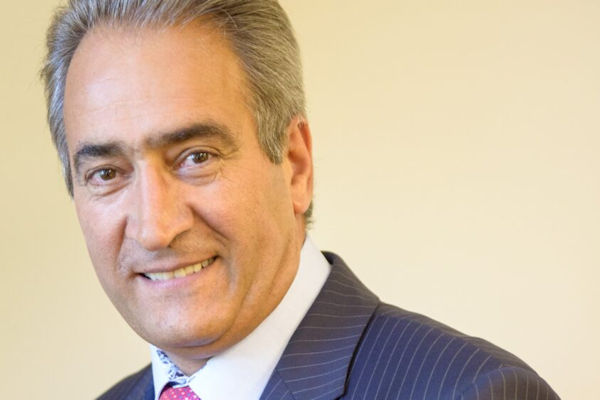
There are few things that all economists agree on, but it’s universally accepted that unemployment figures, across the board, are deeply flawed. “This is a well-known reality, discussed extensively over the past few decades,” said Iraj Abedian, (pictured), Chief Executive at Pan-African Investment & Research, in an interview with the Dolphin Bay Brief. “Yet it has been difficult, if not impossible, to find an alternative to the current definitions and the associated measurement framework.”
Statistics South Africa now reports on four Labour Underutilisation (LU) measures, which “go beyond the traditional unemployment rate to capture other ways people can be underused in the economy.”
LU4 – the 42.9% figure – combines three groups: the unemployed, the underemployed (working a few hours but available for more) and those who are available but not seeking work.
Abedian explained that the measurement of unemployment is based on globally agreed-upon indicators as defined and agreed upon by the International Labour Organisation. “This is to ensure global comparisons,” he said. “Otherwise, it would be difficult to align global or regional comparisons of unemployment across countries. That said, this uniformity, or one-definition-fits-all, entails inaccuracies of its own.”
For example, the definition and size of an “informal economy” differ vastly in Western Europe countries to in the USA or emerging economies. Even emerging economies differ vastly amongst themselves.
“Nonetheless, this is the best we can technically do!”
A “massive and structural” unemployment problem
South Africa’s 32.7% unemployment rate (and remember, that’s the low end of Stats SA’s measurements) is the second highest in the world – behind either Eswatini (according to the World Population Review A) or Sudan (according to the IMF). But can South Africa be Africa’s largest economy while also having its second-highest unemployment rate? That hardly seems realistic.
“Technically, it is realistic,” said Abedian. “If you apply the above-mentioned globally used measurement framework, then it is true that South Africa has a massive and structural unemployment problem.
“This should not be surprising because in addition to the historic problems prior to 1994, since the dawn of the democratic constitutional dispensation, government policies and the management of the public entities and agencies have caused huge and intractable employability problems.”
Abedian pointed out that South Africa being the largest economy in Africa also means that, if mismanaged, its adverse impact would also be the largest. “If you mismanage a corner café, you cause a few hundred thousand rands of financial damage,” he said by way of analogy. “But if you mismanage a large corporation like Discovery or Anglo American, you cause massive, multi-billion-rand damage. Furthermore, when you mismanage a complex economy like South Africa, it is much harder to fix and takes longer to turn around.”
Measuring the vast informal economy
The question remains, though: do those unemployment numbers include people in the informal economy? Fourie insists they don’t, and that many people classified as unemployed operate small businesses in the informal economy. As he told News24: “The lady who sells vetkoek and makes R1 000 a day is regarded as unemployed, but she’s not unemployed; she’s a businessperson. There are numerous businesses like that.”
Here is the complexity: GDP as a concept is messy. As a simple example: if your son cleans the dishes and you don’t pay him, GDP doesn’t change; but if he cleans the dishes and you give him pocket money that he spends at the local Spar, GDP goes up.
The World Bank estimates that South Africa’s informal economy constitutes between 22.7% and 28.8% of GDP, which works out to between R1.1 trillion and R1.4 trillion.
Yet if the money moves in a “closed” economy, none of it get recorded. For example, if a street vendor sells a blanket, then uses that money to buy vetkoek from another street vendor, who then uses that money to pay for ingredients from a subsistence farmer, that’s all off the books and untracked.
How big, then, is the informal economy? While the South African government has no official estimates, the World Bank estimates it to be 22.7% and 28.8% of our official GDP, which works out to between R1.1 trillion and R1.4 trillion.
GG Alcock, author of Kasinomics, puts its value at between R1 trillion and R1.125 trillion annually.
That’s a vast economy – and, to Fourie’s point, it’s notoriously difficult to quantify.
“By definition, the informal economy is largely undocumented, the operators are not registered, and records are not available,” said Abedian. Adding to the complexity, the transactions of a registered business that does a cash deal, saves the 15% VAT, and doesn’t tell the taxman, are not counted. But they are, as Abedian pointed out, “technically part of the informal economy”.
“No one can reliably estimate its size”
“The rise of the digital economy and enterprises offering services online has escalated the complexities of estimating the true size of the informal economy,” he said. “The upshot is that no one can reliably estimate its size.”
But, as Abedian emphasised, the real value of informal business is a different thing altogether. “Even if the statistical quantum of total informal activities is 3% or 2% of GDP, its total real value for those whose dignity, livelihood and subsistence depend on it is invaluable,” he concluded. “We need to distinguish the real value of the informal economy from its total pecuniary contribution to the GDP.”
Dolphin Bay is intrigued by the informal economy as it brings dignity and hope to millions of formally unemployed people.
“I believe society as a whole would be less stable than it is, if employment were truly at 30%-plus,” noted Bertus.
“Perhaps the best assessment of South Africa’s labour market is to say that millions of South Africans are not unemployed, but they are not employed optimally or as meaningfully as possible either.
“The point is that people need to work, earn a living, and help the country grow.
It is a waste of human potential, and of economic growth, that so many people do not have more secure and lucrative work.”
Source: Dolphin Bay
Back to NEWS:
BUSINESS l CLIMATE CHANGE l CONSTRUCTION l EDUCATION l ENVIRONMENT l FORESTRY ENGINEERING FORESTRY l GOVERNMENT l INTERNATIONAL l LAND l RECYCLING l RESEARCH l ROOFING l SHORT HAUL SILVICULTURE l SOCIAL RESPONSIBILITY l TRANSPORT l TREATMENT l TRANSPORT l VALUE ADDING


